For individuals exploring advanced, non-medication treatments for depression, OCD, or anxiety, Deep Transcranial Magnetic Stimulation (Deep TMS) is often recommended. To understand the costs involved, see our comprehensive cost guide.
But a key question remains: How does Deep TMS actually work, and what makes it different from standard TMS?
Understanding the mechanism builds confidence and helps patients make informed treatment decisions.
At Resiliency Mind+Body Medicine®, serving San Juan Capistrano and Newport Beach, CA, Deep TMS is delivered using FDA-cleared H-Coil technology and evidence-based protocols tailored to each patient's brain and clinical profile.
What Is Deep TMS Therapy?
Deep TMS is an advanced, FDA-cleared, non-invasive brain stimulation treatment that uses specialized magnetic coils (H-Coils) to reach deeper and broader brain regions than standard TMS.
It is commonly used for:
- Treatment-resistant depression
- Obsessive-Compulsive Disorder (OCD)
- Anxiety-related conditions (in certain cases)
- Smoking addiction (FDA-cleared protocol)
Unlike medications, Deep TMS works directly on brain circuits, not the entire body.
The Science Behind Deep TMS: How It Works
1. Targeting Deeper Brain Circuits
In depression and OCD, certain brain regions, especially within the prefrontal cortex and connected neural networks, show reduced or dysregulated activity.
Deep TMS:
- Targets the left dorsolateral prefrontal cortex (DLPFC) and deeper limbic structures
- Influences circuits responsible for:
- Mood regulation
- Motivation
- Emotional control
The key advantage: greater depth + wider coverage compared to standard TMS.
2. Magnetic Pulses and Neural Activation
Deep TMS uses electromagnetic induction:
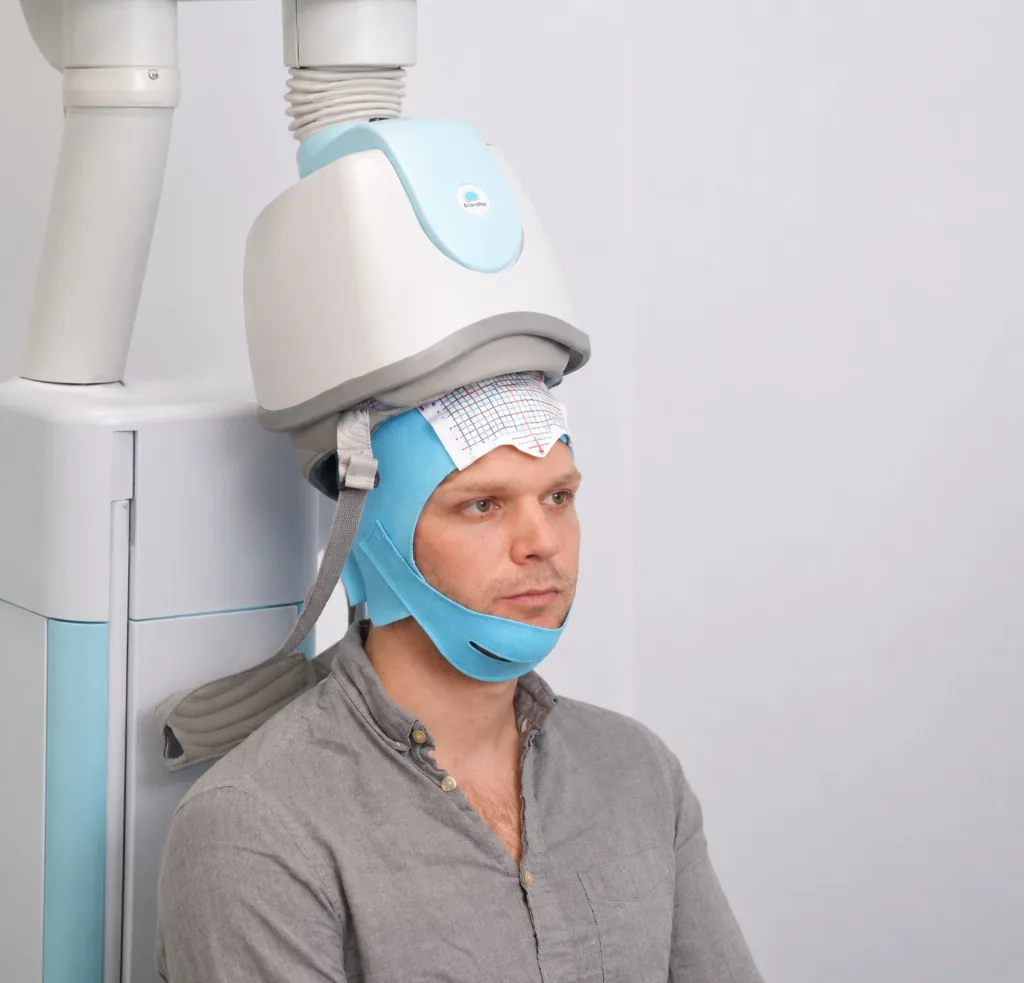
- An H-Coil helmet is placed on the scalp
- Magnetic pulses penetrate deeper into the brain
- These pulses generate localized electrical currents
This leads to:
- Activation of underactive neurons
- Improved communication across brain networks
All of this happens non-invasively—no surgery, no anesthesia.
3. Neuroplasticity: Rewiring the Brain
One of the most powerful effects of Deep TMS is neuroplasticity, the brain's ability to reorganize itself.
With repeated sessions:
- Neural pathways strengthen
- Dysfunctional circuits become regulated
- Brain activity patterns normalize
Over time, this leads to sustained improvements in mood and behavior.
4. Regulation of Neurotransmitters
Deep TMS indirectly improves the balance of key brain chemicals:
- Serotonin – mood stability
- Dopamine – motivation and reward
- Glutamate – neural communication
Unlike medications:
- It doesn't flood the entire body
- It restores balance through targeted stimulation
Step-by-Step: What Happens During a Deep TMS Session?
Initial Brain Mapping
Before starting:
- Clinician identifies the precise target area
- Determines optimal stimulation intensity
This ensures personalized and accurate treatment.
During the Session
- You remain awake and seated comfortably
- A padded Deep TMS helmet (H-Coil) is placed on your head
- Magnetic pulses are delivered in controlled sequences
What patients typically feel:
- Light tapping sensation
- Mild scalp discomfort initially (usually improves quickly)
Session Duration & Frequency
- ~10 minutes per session (often shorter than standard TMS)
- 5 days per week
- Total: 4-6 weeks (sometimes up to 8 weeks)
Deep TMS can often deliver results in a shorter timeframe due to deeper stimulation. For cost details, see our pricing guide.
When Do Results Start?
Response varies by individual:
- Some patients notice changes within 2–3 weeks
- Others improve gradually over the full course
Clinical outcomes show:
- Strong response rates
- High remission rates in treatment-resistant depression
- Durable results after completion
Is Deep TMS Safe?
Deep TMS is FDA-cleared and well tolerated.
Common Side Effects:
- Mild scalp discomfort
- Temporary headache
Rare Risks:
- Seizures (extremely rare with proper screening)
What makes it safer than medications:
- No weight gain
- No sexual side effects
- No systemic fatigue
Deep TMS vs Standard TMS vs Medication
| Feature | Deep TMS | Standard TMS | Antidepressants |
|---|---|---|---|
| Brain Coverage | Deep + Broad | Surface level | Whole body |
| Precision | High | Moderate | Low |
| Side Effects | Minimal | Minimal | Often significant |
| Mechanism | Direct stimulation | Surface stimulation | Chemical |
| Duration | Finite | Finite | Ongoing |
Deep TMS offers the most comprehensive brain stimulation among non-invasive options. For comparison with Spravato treatment, see our insurance coverage guide.
Who Is a Good Candidate for Deep TMS?
You may be a strong candidate if you:
- Have not responded to 2+ antidepressants
- Experience medication side effects
- Prefer non-drug treatment
- Have depression or OCD diagnosis
A professional evaluation is required to confirm eligibility.
Frequently Asked Questions (FAQs)
1. Does Deep TMS hurt?
Most patients feel a tapping sensation. Discomfort is mild and usually decreases after a few sessions.
2. Is Deep TMS permanent?
Results can last long-term, though some patients may benefit from maintenance sessions.
3. Can I drive after treatment?
Yes. There is no sedation, normal activities can resume immediately.
4. How is Deep TMS different from ECT?
Deep TMS:
- No anesthesia
- No memory loss
- Non-invasive
- Minimal side effects
5. Can I stay on medication during Deep TMS?
Yes, in many cases. This is managed by your provider. For insurance coverage options, see our guide to insurance coverage.
6. How effective is Deep TMS?
Clinical studies show high response and remission rates, especially in treatment-resistant depression.
Start Your Personalized Deep TMS Journey
If you are trying to understand whether Deep TMS is the right treatment for you, the most effective next step is a professional evaluation.
At Resiliency Mind+Body Medicine®, you can receive:
- A detailed clinical assessment
- Clear guidance on whether Deep TMS fits your condition
- A personalized treatment roadmap based on your symptoms and history
Request a consultation with the clinical team at the San Juan Capistrano or Newport Beach location to explore whether Deep TMS can help you achieve meaningful, lasting improvement.
References: Transcranial Magnetic Stimulation on Wikipedia | Neuroplasticity on Wikipedia