

TMS for Psychosis
A non-invasive, adjunctive treatment for persistent auditory hallucinations and negative symptoms of psychosis—delivered under careful psychiatric supervision.
Understanding TMS for Psychosis
A Targeted Option for Treatment-Resistant Symptoms
Psychosis—including the positive symptoms (auditory hallucinations, delusions) and negative symptoms (social withdrawal, flat affect, anhedonia) seen in schizophrenia and related conditions—does not always respond fully to antipsychotic medications.
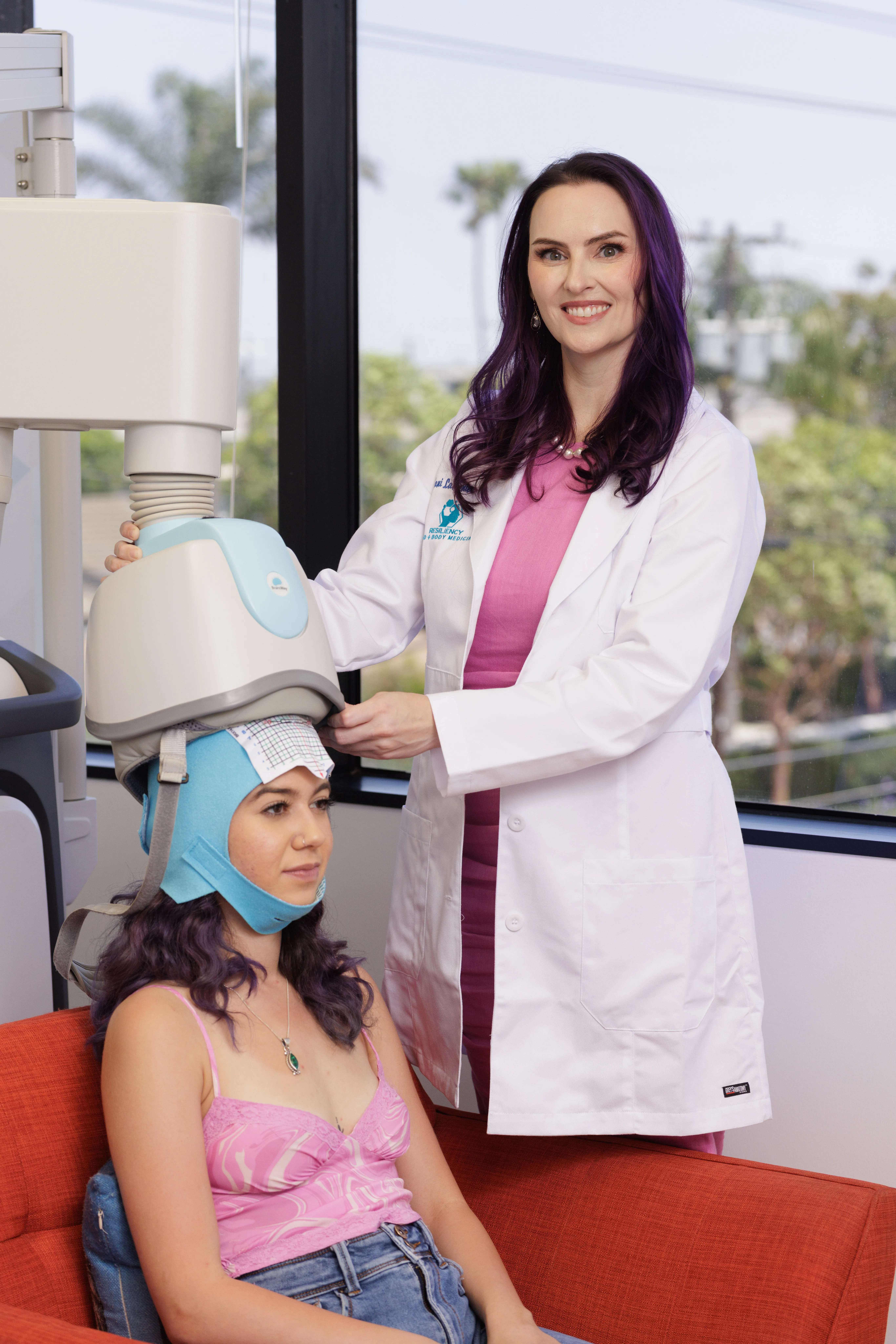
Research over the past two decades supports Transcranial Magnetic Stimulation (TMS) as a meaningful adjunctive therapy. Low-frequency TMS applied to the left temporoparietal cortex can reduce persistent auditory hallucinations, while high-frequency TMS over the prefrontal cortex may ease negative symptoms and cognitive dulling. At Resiliency, TMS is always used alongside—never as a replacement for—evidence-based psychiatric care.
Symptoms Addressed
Where TMS Can Help
Auditory Hallucinations
Reduce the frequency and intensity of persistent voices and internal sounds.
Social Withdrawal
Support reconnection with family, friends, and daily life activities.
Cognitive Dulling
Improve attention, processing speed, and working memory disrupted by negative symptoms.
Anhedonia & Flat Affect
Restore emotional range, motivation, and the capacity to experience pleasure.
Our Approach
Integrated, Physician-Led Care
TMS for psychosis is delivered as part of a complete treatment plan—never in isolation—under the close supervision of our board-certified psychiatrists.
Comprehensive Evaluation
Thorough psychiatric assessment to confirm TMS is an appropriate addition to your care.
Adjunctive, Not Standalone
TMS complements antipsychotic medication, therapy, and psychosocial support.
Targeted Protocols
Low-frequency temporoparietal for hallucinations; high-frequency prefrontal for negative symptoms.
Ongoing Monitoring
Regular clinical reviews to track symptoms, safety, and quality of life.
Explore a New Path to Stability
If antipsychotic medication alone has not fully addressed your symptoms, a consultation can help determine whether TMS fits into your care plan.